

NICON26: Shifting Left, Shifting Mindsets and Turning Reform into Action
Reset for All – Action by All: the theme for this year’s NICON conference.
If I’m being honest, I arrived with a touch of cynicism and scepticism.
Having spent 25 years navigating health and social care as a parent carer, I’ve heard plenty about reform, transformation and putting people at the centre. Policies are so well written but I’ve also experienced the gap between those ambitions and what happens in everyday life.
As the day unfolded, I found myself feeling increasingly encouraged by what I was hearing.
There seemed to be a genuine energy and acceptance that things need to change and, importantly, evidence that change is already underway.
Shifting left — and even further left!
One of the strongest messages was the need to shift left — moving away from reactive, crisis-driven care towards prevention, earlier intervention and supporting people to stay well in the first place.
And then came the challenge to shift left, left!
That gave me hope.
Because for me, this is about much more than changing where care and support is delivered. It’s about changing how we think about people, their lives and the support they need.
It’s about personalisation, people having greater ownership of their health and care data, and being in the driving seat of their own lives. Surely thats just common sense!
It’s also about recognising the enormous amount of knowledge that sits with people, families and those supporting them every day whether that’s a family member, care worker or GP.
Left Left: is exactly the space inCharge has been working in, and it was encouraging to hear these conversations happening at a system level.
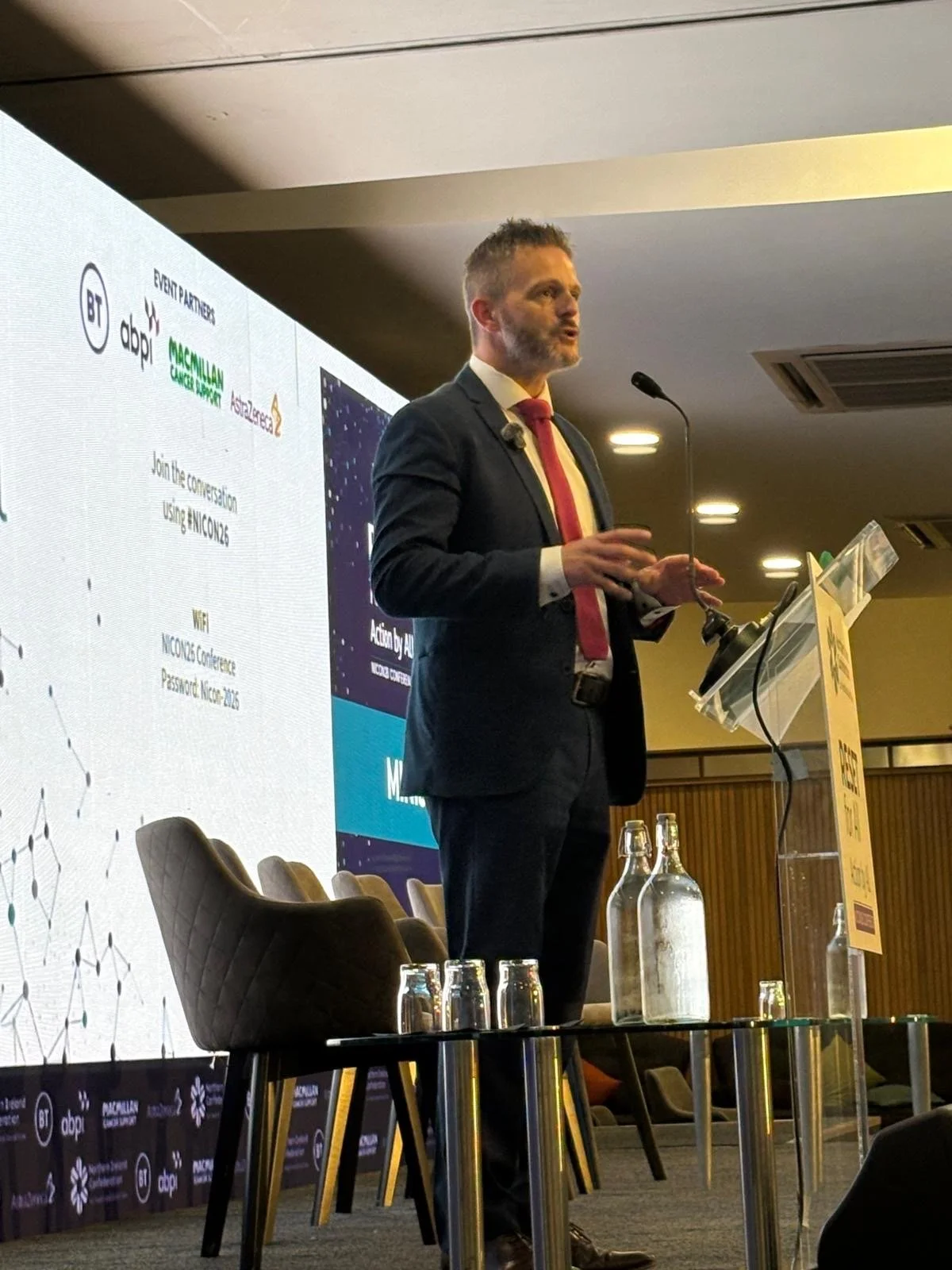
Care closer to home, rooted in communities
The move towards neighbourhood models of care was another recurring theme.
Supporting people in their own homes, connected to their communities, for as long as possible. Bringing care and support closer to people rather than expecting people to fit around services. Also common sense, right?
Of course, none of this happens by simply redesigning structures.
It requires genuine collaboration across health, social care, community and voluntary organisations, alongside people and families themselves.
And it requires us to think differently about what good outcomes actually look like.
Not simply how many hours of support were delivered, but whether that support is helping someone live a good life.
Reform isn’t a nice-to-have
One thing was clear throughout NICON26.
Reform is no longer a nice-to-have. It’s essential. And importantly, it has started.
Professor Rafael Bengoa offered reassurance that more progress has been made than perhaps people working within the system yet recognise.
That was encouraging to hear, particularly when change is painfully slow and often just plain painful.
Digital transformation is happening too, and it’s essential to making reform achievable. But technology alone won’t deliver it.
Culture has to be part of the reform agenda, proactively, from top to bottom and across every organisation.
We need a culture that is open to new ways of working, willing to look at problems through a different lens, and brave enough to act.
We can’t keep doing things the way we’ve always done them and expect different outcomes.
And that openness needs to extend to innovation coming from outside established systems, including innovations shaped by lived experience.
Leadership, collaboration and long-term thinking
I was particularly encouraged by the collaboration happening at senior levels across Trusts, political leadership and health and social care systems, including relationships north and south of the border.
It feels like a positive systems shift, with a growing recognition that the challenges we face cannot be solved by individual organisations working in isolation.
I was also impressed by Minister Robbie Butler. Not long in the role, and with limited time before the next elections, he certainly appears to be throwing himself into the job.
Heather Moorhead and fellow panellists raised important points around the election brief and the need for multi annual budgets for planning and projects.
Health and social care leaders need the confidence and stability to plan effectively, invest in reform and see programmes through beyond short-term funding and political cycles.
Meaningful transformation needs time, commitment and continuity.
Where does inCharge fit?
For me, NICON26 reinforced that we’re in the right place and space.
inCharge was born out of lived experience and the practical challenges of coordinating personalised care and support.
Our Family App is already helping people and families manage everyday support, while our Service Provider App is helping organisations evidence personalised care in practice.
We’re now exploring the next step through inCharge Intelligence: how information already being captured in everyday life might help provide meaningful evidence of outcomes, identify changing needs and support professionals with reviews, reporting and decision-making.
We don’t believe technology should replace relationships or professional judgement.
We believe it should support them.
And we believe people and families should benefit first from the information they create, while retaining appropriate ownership and control over how that information is used.
That’s why co-design is part of how we do business.
As I shared during my panel contribution, the reset needs evidence and families can help create it.
Good conversations and new faces
In some ways it’s like preaching to the converted. Those at the conference are already committed to making positive change happen. But it’s always good to connect with new people and familiar faces.
No matter how brief the conversations were, it was great to catch up with Deena Nimick, Gillian Lewis, Paul Rice and Damien McCallion.
And a special mention to Jennifer Neff, who hosted our innovation panel. There was plenty in that conversation worth exploring further, particularly around the culture of innovation, challenging established ways of working and what it takes to turn lived experience into practical solutions.
I’ll share more from that discussion separately.
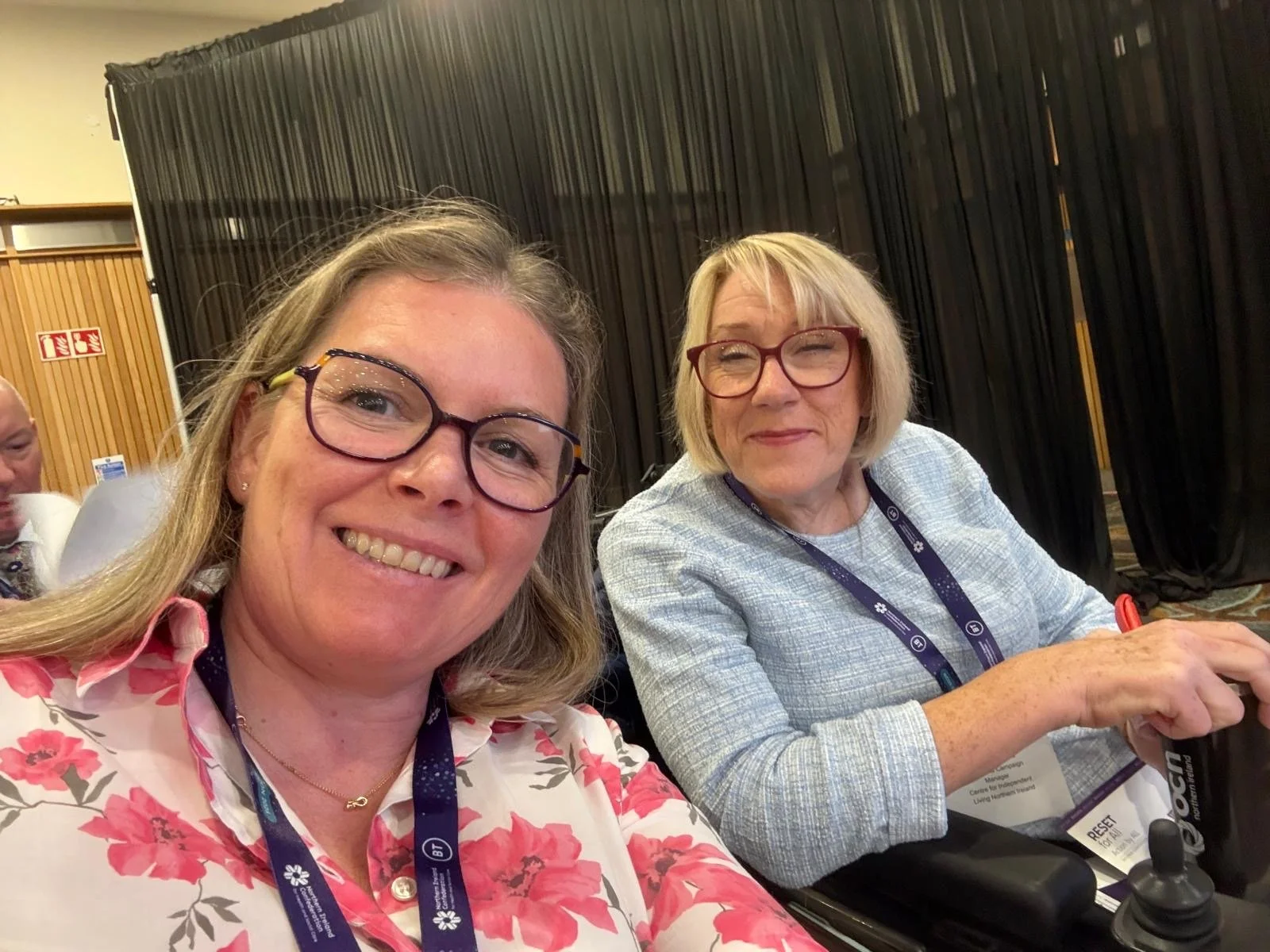
Great to catchup, Deena
Leaving with hope — and a challenge
I arrived with a degree of scepticism. I left with renewed hope and a stronger sense that we’re in the right place, doing the right work, at the right time.
For me there was evidence of momentum, collaboration and a willingness to think differently. I’d like to see more evidence and we want to be part of building that evidence-base.
The direction of travel towards prevention, neighbourhood care, personalisation, digital innovation and better outcomes is clearer.
We need to keep turning that ambition into practical action.
And as we do, let’s make sure people, families and those supporting them every day aren’t simply consulted along the way.
Let’s recognise them as essential partners in shaping, delivering and evidencing what good health and social care actually looks like.
Reset for All. Action by All.
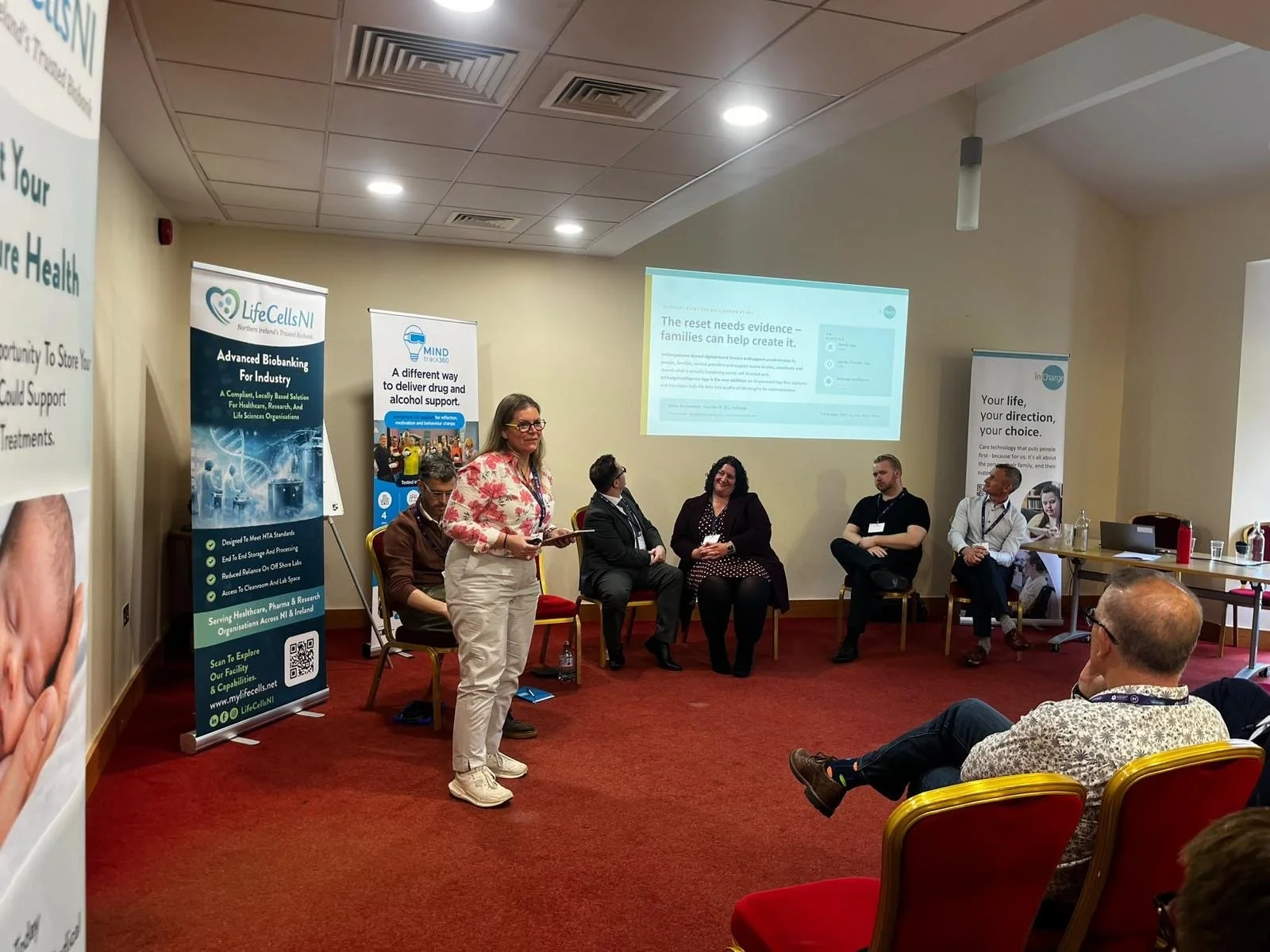
Sharing inCharge in the Innovation Spotlight session with Jennifer Neff