Building technology for real people and ordinary lives: Co-design with us!
inCharge has been hanging around the good folk of Social Care Future, In Control Partnerships and Gloriously Ordinary Lives for several years now.
And we mean that in the best possible way.
These are communities and movements that keep us grounded. Have welcomed us in. They continually bring us back to why we approach technology in the way we do and why the principles behind their work have the potential to shape, influence and change how social care can and should work for people, with people.
But before we talk about technology, data, AI or digital transformation, we need to talk about what all of it is for.
Start with the life, not the system
The Social Care Future vision captures it all really:
“We all want to live in the place we call home, with the people and things that we love, in communities where we look out for one another, doing the things that matter to us.”
It sounds simple. And that's exactly the point.
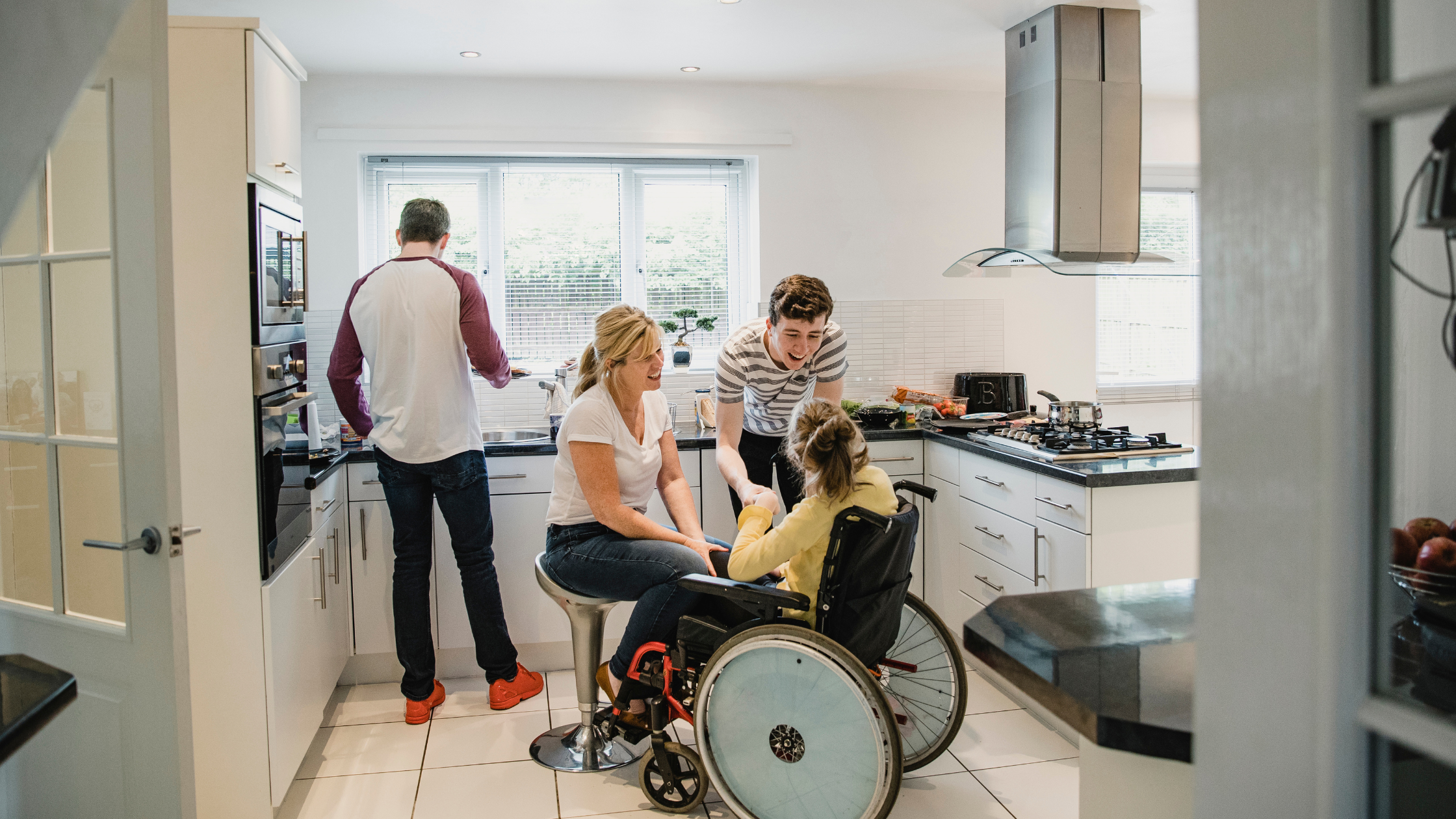
Social care should ultimately be about enabling people to live good, ordinary lives - maintaining relationships, making choices, contributing, belonging and doing the things that matter to them.
That connects closely with the idea of Gloriously Ordinary Lives. Not a life defined by services, assessments or care plans, but one that's about getting both the mundane and the heart sing - the everyday stuff and the moments that make life worth living.
And then there are In Control Partnerships Be Human principles:
BE Human. BE Kind. BE Trusting. BE Honest. BE Present. BE Transparent. BEhave.
Taken together, these ideas give us a useful lens through which to think about social care. A lens through which to approach life.
They also give us a pretty good lens through which to think about technology.
What does that mean when we build tech?
At inCharge, we keep coming back to one question:
What does it mean to design technology that supports a good, ordinary life?
It can't simply mean digitising existing social care processes.
And being person-centred can't mean putting someone's name and photograph at the top of an app while everything underneath continues to be organised around systems and services.
The person has to remain visible in the information, decisions, heard and involved in conversations happening around them.
That's why our starting point is the ordinary day-to-day.
Who is supporting me today? What am I doing? What's important to me? What happened yesterday? What's working well? What has changed? What does my team need to know?
Individually, those things can look mundane.
Collectively, they tell the story of a life.
Co-design is more than asking for feedback
This thinking has also shaped the way we co-design inCharge.
We don't believe co-design means building something and then asking people whether they like it.
It means being prepared to show unfinished work. To listen directly. To change direction. To acknowledge when we don't know the answer.
Our technology team talks directly to the people using the technology. Families, people with support needs, personal assistants, providers and professionals have all brought different perspectives to what we are building.
Sometimes those conversations validate what we thought.
Sometimes they completely challenge it.
Both are valuable.
The Be Human principle - Be Present is particularly important here. Technology can put distance between the people building tech and the people expected to use it. We are deliberately trying to shorten that distance.

And now comes the intelligence
As inCharge has grown, we are moving into an exciting new space.
Every day, people are using inCharge to coordinate real support around real lives. They are creating schedules, recording what happened, sharing relevant information and building a picture of how personalised support works in practice.
That creates inCharge intelligence - not data created because somebody has been asked to complete another form, but information generated through the ordinary process of coordinating support.
And that raises some important questions.
Could that intelligence help people and families tell the story of how their support is working?
Could it provide useful evidence around outcomes and what's important to the person?
Could it contribute to Direct Payment and Self-Directed Support reviews without families having to reconstruct months of information?
Could it help professionals access better evidence while potentially reducing some of the administrative burden around review?
And could we do that while remaining true to the principles of trust, transparency, choice and control?
That last question really matters.
Because the opportunity isn't to use technology to create more surveillance or another layer of monitoring.
It's to explore whether information already being generated through everyday life can become more useful to the person, their family and the people and organisations supporting them.
So we're taking our own advice: let's co-design it.
We don't want to sit in a room and decide what local authorities need from this information.
We want to explore it with them.
We are opening conversations with local authorities working with Direct Payments, Self-Directed Support and personalised care to explore how inCharge intelligence could responsibly support existing review processes, strengthen evidence and potentially lighten some of the administrative load for people, families and teams.
And we'd particularly love to hear from councils and trusts already engaging with the Social Care Future vision, Be Human principles or similar approaches to personalisation.
Not because we have arrived with the answer.
Because we think there is something worth exploring together.
The principles that have influenced inCharge ask us to be human, be trusting, be present and be transparent.
So that's how we want to approach this next stage too.
If you work in a local authority or Health and Social Care Trust and this conversation resonates with you, get in touch with us – karen@inchargehq.com
Come and challenge our thinking. Bring your experience. Help us understand what would genuinely be useful and of course, what wouldn't.
Perhaps the real test isn't whether we can say inCharge is person-centred or co-designed.
Those are easy words to use.
The better test is whether the people who use it experience it that way and whether the technology ultimately helps people have more of the life they want.
That's the standard we want to keep holding ourselves to.