

In Case of Emergency
Day 1
Friday started out great. A later-than-usual start and a very welcome lie-in. We took our second daughter to her mock music practical exam — she was delighted with her performance. She worked hard and deserved to finish on a high note. Pun intended.
We picked up coffee and scones from Reds and were home in time for a fellow founder call - someone much earlier in their journey but equally mission-driven and born from lived experience. I was excited to see where the conversation might go.
But before I could find out too much, I got a call.
Georgia had taken a tumble.
It sounded serious.
I called my husband, who also works from home, and we set off on the 20-minute drive, with everyone apparently doing 50kph in a 100kph zone. Like, come on!
When we arrived, the Gardaí were already at the scene. How lucky that they happened to be passing just as Laura, Georgia’s PA that day, was comforting her and helping her to a seat.
With the ambulance on its way, I hugged Georgia and Laura and thanked the Gardaí. One turned out to be a well-known Gaelic footballer (completely lost on me at the time), and the other remembered Georgia from a road safety and community policing event where she had proudly sat in the patrol car and experienced the blue lights.
So kind. So calm. They stayed to direct traffic while we got ourselves sorted.
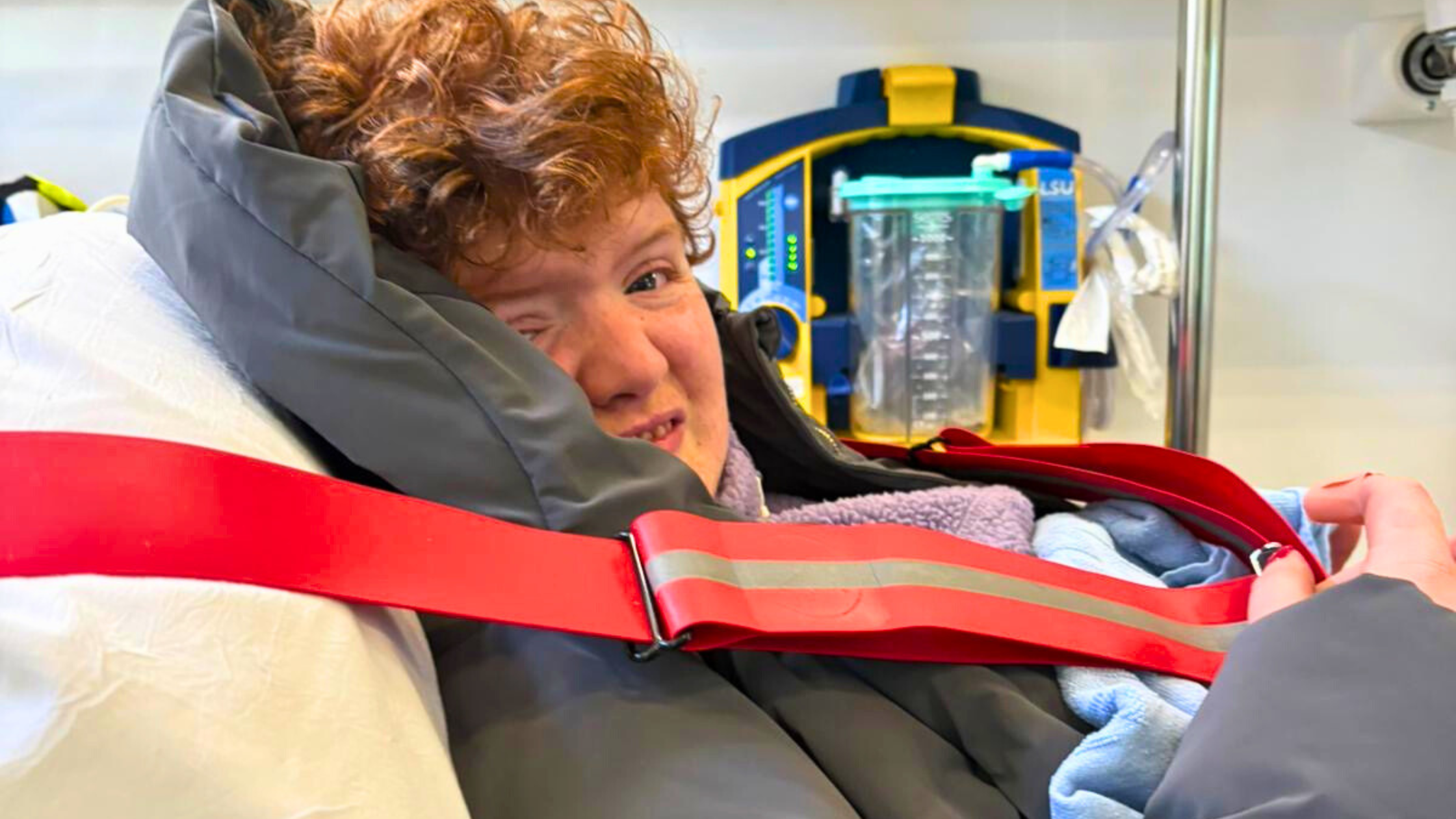
When the paramedics arrived, we moved into practical mode: vitals, questions, reassurance. Georgia was content and cooperative but unable to bear weight. Soon we were underway, thankfully without blue lights.
When asked about Georgia’s medication, I logged into her team space on the inCharge app. As I called out the list, the paramedic asked what I did for a living.
“Not quite making a living from it yet,” I said, “but I run a small software company - care technology. The inCharge app.”
He asked if he could have a look.
Of course.
“This is unreal,” he said. “Can anyone else access this important information, or is it just for you?”
Everyone on her team — personal assistants, family, friends — anyone we invite in.
And it’s not just for our personal use. This is my work now. Person-centred software for family-led care.
I told him about our latest co-design work focusing on the supported person, and the features we are developing to help family carers download their knowledge into one digital space, a space they control, while creating a view that reflects the personality and preferences of the person at the centre, in a way they are happy to be represented.
“This is like putting power back into people’s hands,” he said.
Exactly that.
He showed me what emergency services typically need to capture, and we talked about how that might look, building on work already underway.
Co-design in motion.
Compassionate, considerate of her needs, and respectful of my knowledge as a parent, they delivered us to Letterkenny University Hospital and placed us on the Purple Path: the minor injury clinic, faster than A&E.
Her ankle was swollen, but she was moving her leg and being, as always, good as gold. This young woman, our eldest daughter, has the strength and constitution of an ox.
Like every emergency department, it was busy and getting busier. Georgia sat in a chair, positioned in a place of prominence. After two and a half hours, we made it to X-ray.
We’ll be home in no time.
Right.
Wrong.
Her ankle was fractured in three places. She needed emergency surgery.
Not what we were expecting at all!
She must have touched at least twenty ponytails belonging to wonderfully cooperative staff who quickly understood that Georgia’s unique way of communicating includes seeking out friendly people and a sensory fix from the long hair.
One male staff member apologised for not having a ponytail.
All graciously accepted my explanation that the whoofing noises and her saying “bauble” were, in fact, very good signs.
Baubles everywhere.
As we were being admitted with only the basics, handbag, phone, charger, my husband headed off in hunter-gatherer mode to Dunnes Stores. Still slightly in shock, he rang me:
“Will Penneys work?”
He had gone to the wrong shopping centre.
Of course. We just needed the essentials.
And he got everything on the list.
Personal budgets: to understand or not to understand.
There was some initial confusion when some staff heard Georgia had a personal budget.
“Does she have care?”
Yes, but it’s personalised. Organised by us.
“So… she doesn’t have care?”
Yes, she does. It’s tailored to her needs and preferences. But in that moment, I didn’t quite have the energy to explain the mechanics of self-directed support.
Thankfully, the majority of staff got it. Not only getting it, loved the idea that Georgia is living her best life.
Around 11pm we got a ward bed, disruptive for those already settled for the night. It was a middle bay - a tight squeeze - but I was deeply grateful to stretch out on a mattress beside her.
Georgia slept on and off. Toileting proved challenging, and we had a few mishaps. I didn’t sleep a wink, my mind racing ahead to the practical implications of surgery - and likely house modifications - while listening to the symphony of hospital snoring and call bells.
At one point, a neighbour’s phone began playing an ABBA song.
Georgia started humming along.
I smiled in the dark.
Day 1 done.
Day 2
Sometime in the middle of the night, while Georgia slept and I was drifting in and out of sleep, I realised something.
In my rush to onboard everyone else onto the app… I had overlooked parts of Georgia’s own profile.
Communication? Covered.
Medicines? Done.
Preferences? Absolutely.
Daily updates? Perfect.
But her deeper medical history - the name of her condition, operations she’s had - the things that live naturally in my head rather than in daily routines, were less complete.
A task for me when I’m back at myself and have the headspace to download more of that history while it’s fresh from retelling it.
A reminder that even founders are still learning how to optimise what they build.
Morning brought news we weren’t expecting.
Her ankle was too swollen to operate.
The consultant explained why - clearly, calmly, logically - and it made perfect sense. Still, I was bitterly disappointed. Surgery would have brought a plan, some sense of what comes next.
Not the start we hoped for.
But on the bright side - we could both eat.
(I wouldn’t eat in front of Georgia while she was fasting.)
One of our greatest practical challenges so far has been toileting. A disastrous attempt in A&E the previous day had knocked our confidence.
Help was available - all we had to do was pull the emergency cord in the disabled toilet.
Except… it had already been pulled out of the ceiling.
Those cords are there for a reason.
What followed was a steep learning curve for me, observing and learning how to organise a bedpan - not a skill I had needed before now. Let’s just say results were mixed, and leave it there.
Perspective and timing is everything.
Thankfully, we found ourselves in a good ward, surrounded by kind people. At one point, our neighbour popped her head around the curtain.
“This is Georgia,” I said.
“I know,” she replied. “I recognise her from inCharge.”
Sorry… what?
As it turns out, we had spoken years ago when planning Georgia’s personalised budget. Not only do we share similar views on person-centred support, she has years of experience supporting people with learning disabilities.
What are the chances?
We spoke about the app, and for the second time in less than 24 hours, I found myself showing it not as a founder, but as a parent using it in real life.
She was generous with her encouragement and refreshingly practical too.
When the woman in the corner bay was discharged, she suggested we ask to move. A bay with two walls and two curtains suddenly felt like an upgrade.
Privacy and space are in short supply in any busy hospital. You take them when you can.
Kay kindly kept Georgia company while my husband and I stepped outside for a blast of brisk, frosty air. I wasn’t comfortable going home - it’s too far, and I simply wouldn’t have settled - so we did another essentials run and shared a bowl of chips.
(For the record, the hospital food is very good, and staff have gone out of their way to accommodate Georgia’s preferences.)
Then came more kindness.
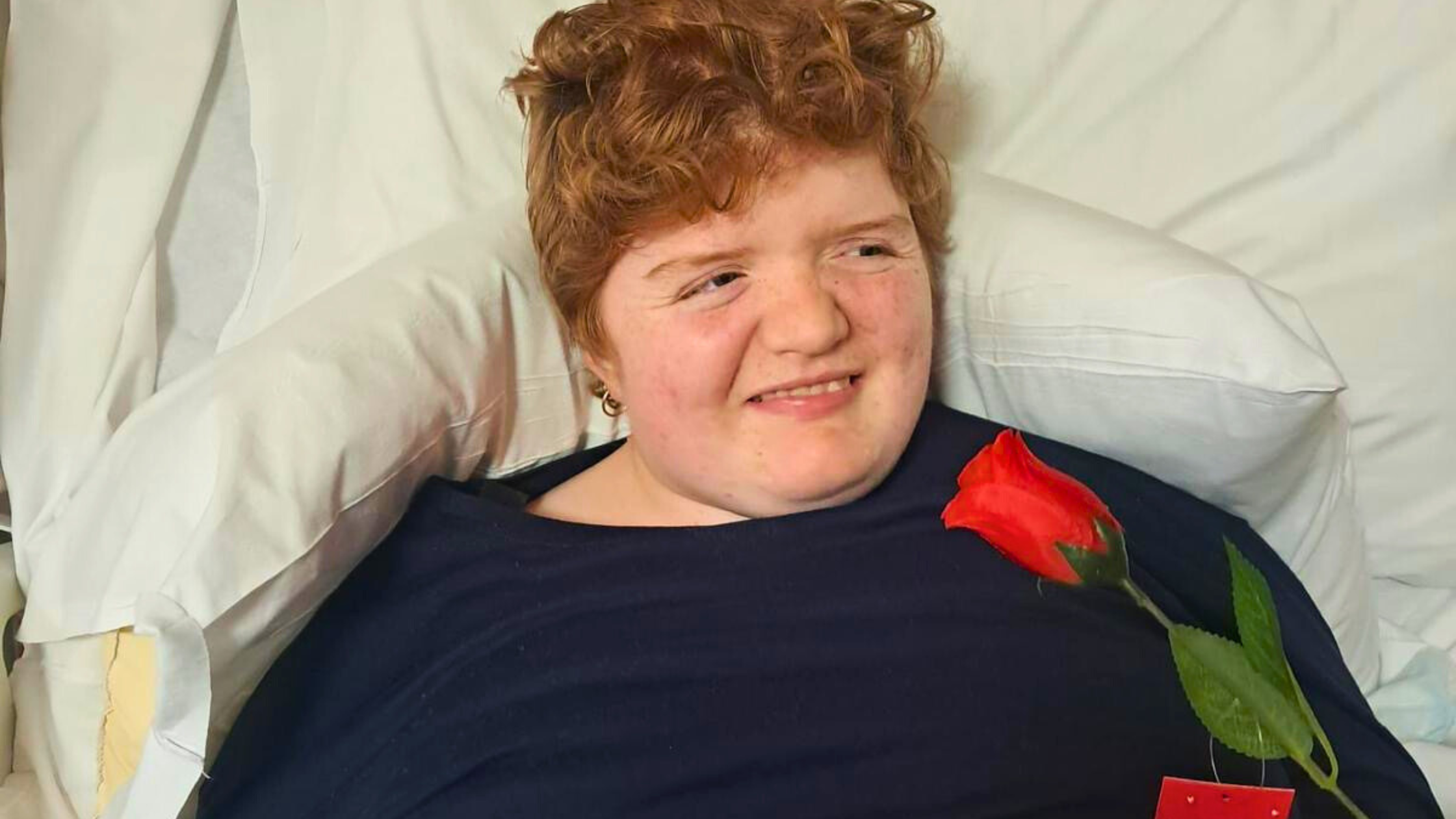
Laura and Saoirse, two of Georgia’s PAs, arrived with gifts: a rose, Valentine’s cards, colouring books and twistables, chocolates, and a sneaky McDonald’s.
They know her well.
Sensing my growing anxiety around toileting - something that took us years to truly figure out - they suggested trying the commode.
Reports were… mixed.
One nurse described a flooded floor.
Another said it wasn’t a total disaster, and that Georgia managed getting in and out of bed remarkably well.
And again — doesn’t everything depend on perspective?
Before George left that evening, I managed a shower.
Heaven.
That night - the relief.
We both slept.
Properly slept.
I felt human again.
Day 2 done.
Day 3
Sleep was patchy. Others on the ward were in significant pain, and the heavy swing of a self-closing door didn’t help.
Consistency around toileting still varies from shift to shift, which can be confusing for Georgia - but we are finding our rhythm.
By now, the nurses offer their ponytails before I even ask, explaining to one another with understanding.
“This calms her down?”
Yes.
And just like that, she continues winning over patients and staff alike.
One nurse shared something that stayed with me. He spoke about lessons learned from more experienced colleagues - the kind that never leave you. Then he said, very simply, that as her mum, I know my daughter best.
In effect, I’m part of the multidisciplinary team.
Exactly as it should be.
Sunday moved at a slow pace, lifted by a visit from my husband and our other three children. They were clearly worried but relieved to find Georgia in good form - and apparently, I looked fresher than expected. High praise from people who have seen me in every possible state.
Phones remain both a blessing and a curse. A rogue ringtone or YouTube clip can pierce the quiet at any hour, while I lie anchored to the mattress - not lost on me, given I’m on a surgery waiting list for this very ward.
Never a dull moment.
Eventually, the noise settles.
And we manage another snooze.
Day 3 done.
Day 4
I showered, packed up the mattress, and was ready before 8 - quietly hoping we’d be early in the rounds.
The doctor examined Georgia’s ankle.
“It looks good,” he said. “I just need to run it by the boss.”
The boss agreed.
Yes!
There’s a completely different rhythm on a Monday morning. Everything shifts up a gear: purposeful, focused, moving. I much prefer this pace. Forward motion feels like progress.
Before noon, we were in the anaesthesia room. I was impressed watching the team use ultrasound to find a good vein - far less stressful for Georgia, and for me.
Theatre nurses greeted her with warmth and ease. Someone put on One Direction, and Georgia hummed along, tapping her good foot.
Moments later, she was asleep.
No fuss. No distress. Professionalism wrapped in kindness.
I was shown to a family room, exactly what I needed.
Quiet. Space. A moment to breathe.
But first: breakfast. Beef and potato curry with rice. It hit the spot!
For company, I tuned into Chris Stapleton and enjoyed the alone-time. Soon we would have a plan. Soon we would begin the next phase - the road to recovery.
The surgery was a success.
A complicated break, needing plates and screws to support better long-term movement - but a success nonetheless. Relief doesn’t even capture it.
She took her time coming around, making full use of the anaesthetic to sleep through most of the evening.
Lucky her.
My husband and I watched, grateful for the skill in that building, and for the many hands that carried her safely through.
Day 4 done. The emergency has passed.